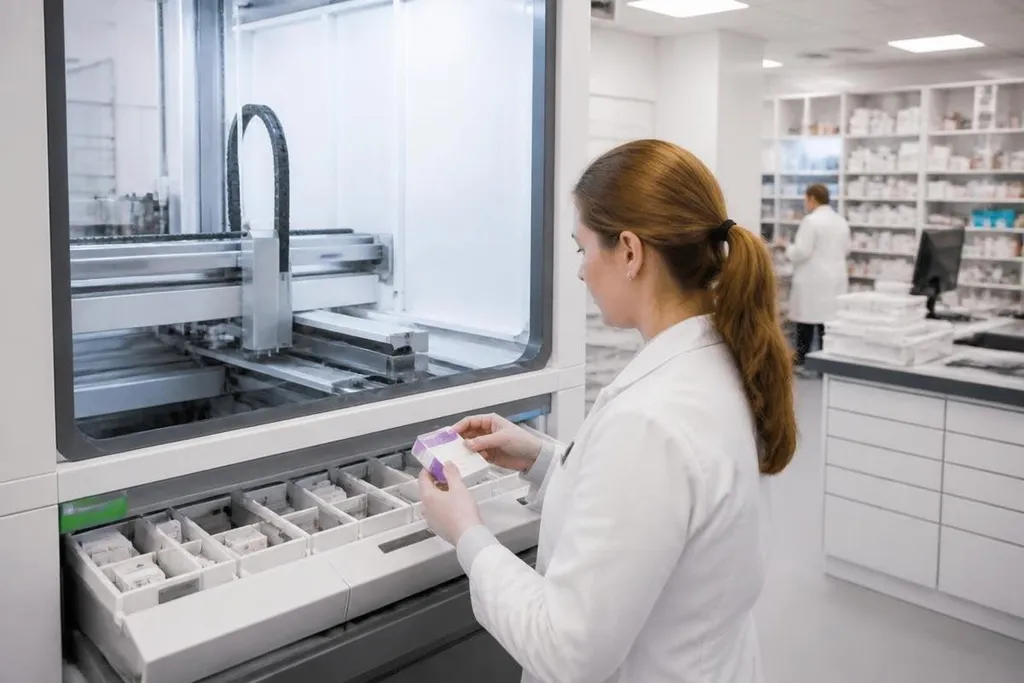
A pharmacy robot can already store medicines, pick packs, and move orders through a dispensary. AI adds a layer that helps the system read images, predict demand, and decide what should happen when an order does not match the usual pattern.
For a pharmacy manager, the useful question is practical: which tasks can AI handle safely, and where must a pharmacist still make the call?
Quick read
- AI can help robots identify packs, spot empty locations, and sort work by priority.
- The largest gains come from fewer manual searches and better handling of exceptions.
- Safe use still needs pharmacist review, audit records, and a clear fallback when the model is unsure.
Where AI fits inside the pharmacy
A pharmacy robot normally follows set rules. It takes a command, finds a storage location, picks the medicine, and sends it to the next station.
AI helps when the scene or the order does not match those rules exactly. A camera system may read a label, check a barcode, or find a damaged pack. A machine-learning model can compare the image with known examples and flag a pack for review. That does not mean the model should make the final decision about a medicine. It means the robot can sort routine work from work that needs a person.
Storage planning can also use AI. Software can estimate which medicines will be needed sooner, then place those packs in locations that reduce travel inside the robot cell. The result depends on clean stock records and steady demand data. A forecast made from missing or outdated records can send the robot to the wrong place faster.
Faster picking still needs proof
Pharmacy automation deals with small differences that matter. Two packs may have similar colours, while their names, strengths, or expiry dates differ. A camera model may spot these details, but the system still needs a barcode check and a recorded chain of handling.
That record matters when a pharmacist reviews an exception. The software should show what it saw, which rule it applied, and why it stopped the order. A confidence score alone is not enough. Staff need a clear reason they can check.
Order software can sort work by delivery time, storage condition, or the amount of manual work it needs. It can also direct a robot to repeat a scan or send a pack to a review station. Those choices save staff time only when the system stops cleanly instead of forcing a person to repair a hidden error later.
A pharmacy robot can sort the right pack and still need a person when a label, dose, or storage condition falls outside its rules. Robot24.com can connect that handoff to the software setting and test record, giving the next section a clear place to examine what the robot cannot handle alone.
The limits are part of the design
Pharmacy robots work in controlled spaces, but the work still changes. Packaging can be redesigned. A supplier can send a different box. A shelf can be empty, blocked, or stocked with a pack that the camera has not seen before.
Those cases are where an AI system needs a safe stop. The robot should put the order into a review queue, show the image and stock details, and let a trained member of staff decide what happens next. A system that hides uncertainty creates more work for the pharmacy team.
The same rule applies to demand forecasts. A model may spot a pattern in past orders, but it cannot know every reason demand changed. A local outbreak, a supplier delay, or a new prescribing rule can make old patterns less useful. Pharmacy staff still need control over stock decisions.
I’d judge an AI pharmacy robot by its exception handling before its demo speed. Picking a familiar pack quickly is expected; stopping at the right moment is what protects the workflow.
A buying checklist for pharmacy managers
Before approving an AI feature, check these points:
- Name the task: Is the system reading packs, planning storage, sorting orders, or doing something else?
- Set the handoff: Where does a pharmacist review a low-confidence result?
- Check the record: Can staff see the image, scan, rule, and time linked to each exception?
- Test new packaging: Ask how the robot behaves when a box shape, label, or supplier changes.
- Plan a fallback: Know how orders move if the model, camera, network, or robot stops working.
These checks turn a broad AI claim into a specific work question. They also show where installation, staff training, software updates, and validation will add cost beyond the robot itself.
The next useful measure is not how many tasks AI can claim to handle. It is how many orders reach the pharmacist with fewer searches, clear records, and no unsafe guess when the system meets something unfamiliar.